





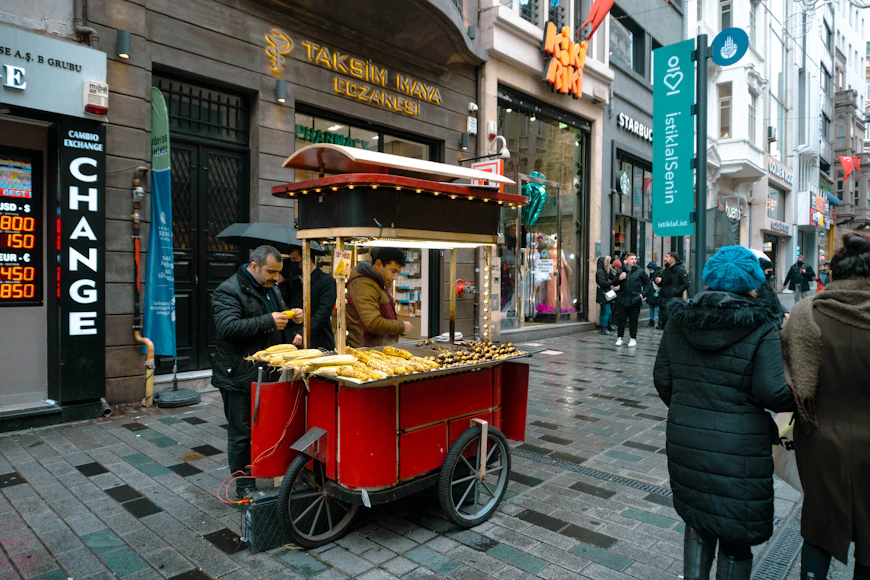
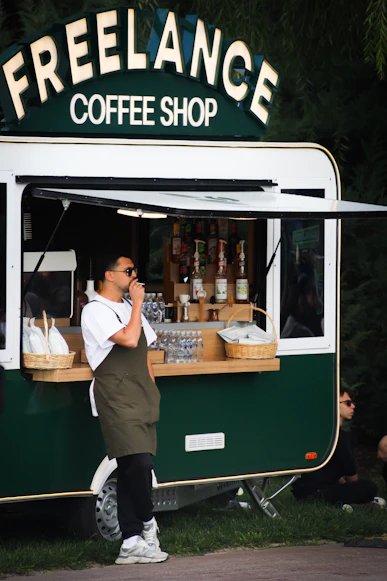
A mobile coffee cart is considered one of the most profitable and widely popular business ventures. The concept revolves around converting a vehicle or unit equipped with the latest specialty coffee brewing equipment into a mobile coffee shop, serving customers in public squares and busy thoroughfares.
Mobile Cafe Cart Project
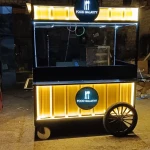
Whether you choose classic wooden designs or modern metal structures, the variety of cart styles plays a crucial role in attracting attention and creating a unique visual identity, providing a comfortable and innovative experience for customers in different locations. This project is highly profitable when implemented with a clear strategic vision.
To ensure consistent quality, you can collaborate with major food companies to secure the finest coffee beans, milk, and flavorings at competitive prices that support your profit margin.
A key step before launching is conducting a thorough feasibility study that tracks the capital costs of purchasing and equipping the cart and technical equipment, along with calculating monthly operating expenses such as raw materials and energy. A smart location selection and targeting the right audience will guarantee high financial returns and rapid business growth.
How to Establish a Mobile Coffee Cart Business?
A coffee cart is an innovative and profitable business idea based on serving coffee and hot and cold beverages in various locations using a mobile cart. It can be a successful project if carefully planned and the steps are implemented correctly.
Here are the steps to starting a mobile coffee cart business:
- Choosing the Right Location for Your Mobile Coffee Cart
Selecting the right location is one of the most important factors for the success of a mobile coffee cart project. You should target areas with a daily coffee-consuming clientele.
Here is a list of the best locations for opening a mobile coffee cart business:
In front of universities and schools.
Shopping malls and markets.
Industrial cities and office areas.
Parks and tourist areas, especially in the evenings or on weekends.
Transportation hubs.
Events such as festivals and sporting events.
2. Equipping Your Mobile Coffee Cart
A coffee cart project requires basic equipment to ensure the quality of the beverages and ease of operation. Whether you are starting with a limited or medium budget, you must provide the essential equipment for the project. Here are the most important equipment required for equipping a mobile coffee cart:
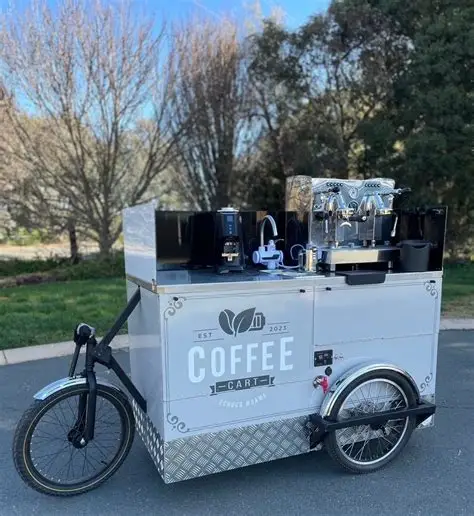
A cart specifically designed for the project with an attractive interior.
The cart’s specifications should be:
Weather-resistant (e.g., rain and sun).
The ability to open windows or doors to serve customers.
Adequate space for storing equipment and raw materials.
A good ventilation system.
A generator: If the project is located in an area without electricity.
A portable battery: A backup power source.
Electrical wires and cables: For safe power connections.
Espresso machine: Choose a professional machine such as the Nuova Simonelli or Rancilio, preferably a semi-automatic model to save time.
Coffee grinder: Essential for grinding fresh beans before brewing.
A small refrigerator: For storing milk and cold ingredients such as flavorings and cream.
A water tank: Of suitable capacity, connected to the espresso machine.
Serving equipment:
Paper cups in various sizes, suitable for single use.
Plastic spoons, straws for cold drinks, cup lids, and beverage bags.
Cleaning supplies: A machine cleaning brush, special cleaning products, towels, liquid soap, sanitizers, and waste containers.
An electric kettle: For hot water to prepare Turkish coffee or tea. Frappuccino Machine: If you plan to serve cold drinks like Frappuccinos.
Electric Blender: For preparing cold drinks or smoothies.
Large Water Tank: To provide clean water for making drinks.
Internal Shelves: For cleaning equipment and tools inside the cart.
Media Board or Display Screen: For displaying the menu and prices (a small board or digital screen can be used).
Payment System: Point of Sale (POS) device or QR code for electronic payment.
Small Fire Extinguisher: Essential in emergencies.
First Aid Kit: For treating emergencies.
Interior Lighting: For operating at night or in low-light conditions.
Security Cameras: To protect the cart from theft.
Optional Extras: Extendable awning to protect customers from the sun, and a small table for serving snacks (such as croissants).
3. Raw Materials for a Mobile Coffee Cart Project
Raw materials are the foundation upon which a mobile coffee cart project depends to ensure the provision of high-quality and delicious products. The raw materials you use must be fresh and of high quality to meet customer expectations and attract them continuously. Here is a detailed list of the raw materials you will need for your coffee cart project:
Freshly roasted coffee beans.
Fresh milk and plant-based milk (optional).
White sugar and brown sugar.
Artificial sweeteners such as stevia.
Vanilla, caramel, and chocolate syrups.
Cinnamon and cocoa powder.
Whipped cream for garnish.
Ice for cold drinks.
Grated chocolate for garnish.
Cookies, croissants, and mini cakes.
Black, green, and herbal teas.
Purified water.
Soap and sanitizer for cleaning equipment.
Plastic gloves for hygiene.
4. Raw Materials for a Mobile Coffee Cart Project
Raw materials are the foundation upon which a mobile coffee cart project relies to ensure the provision of high-quality and delicious products. The raw materials you use must be fresh and of high quality to meet customer expectations and attract them continuously.
Below is a detailed list of the raw materials you will need for your mobile coffee cart project:
Freshly roasted coffee beans.
Fresh milk and plant-based milk (optional).
White sugar and brown sugar.
Artificial sweeteners such as stevia.
Vanilla, caramel, and chocolate syrups.
Cinnamon and cocoa powder.
Whipped cream for garnish.
Ice for cold drinks.
Grated chocolate for garnish.
Cookies, croissants, and mini cakes.
Black, green, and herbal teas.
Purified water.
Soap and sanitizers for cleaning equipment.
Plastic gloves for hygiene.
5. Marketing Plan for a Mobile Coffee Cart Project
The success of a mobile coffee cart project depends heavily on a smart marketing plan that attracts customers and fosters brand loyalty. Here’s an effective marketing plan for your mobile coffee cart project:
Choose an attractive name and a distinctive logo that reflects your business identity.
Use consistent colors and designs on your cart, cups, and promotional materials.
Create Instagram and TikTok accounts and post short videos of your daily coffee preparation.
Offer free coffee to your first 100 customers during the launch.
Share photos of your coffee in local WhatsApp and Facebook groups.
Print discount cards and distribute them to nearby businesses.
Sign up with delivery apps like Tamna and HungerStation.
Two months after launch, purchase targeted Instagram ads for your area.
Offer a 20% discount to students and offer coupons at universities.
Give a free cup of coffee for every five purchases.
Take photos of customers drinking coffee and post them with a relevant hashtag.
Change your cart’s location every two weeks to attract new customers.
Print your business name on the cups for free advertising.
Participate in events and local markets to increase your market presence. Create a special seasonal drink each month and offer it at a discount during the first week.
Ask customers for their feedback and adjust the menu accordingly.
List your business on Google Maps to make it easier for people to find you.
Hold small contests, such as a “Best Photo with Coffee” contest, and win a free coffee.
6. Mobile Coffee Cart Product List
Determine the beverage menu you will offer based on anticipated demand and customer preferences.
Table of contents [Show]
- A Typical Mobile Coffee Cart Menu Includes
- Is A Coffee Cart Project Profitable?
- Reasons For Profitability Of A Coffee Cart Business
- Important Information About A Mobile Coffee Cart Business
- Most Important Health Requirements For Mobile Coffee Cart
- How Can I Choose Best Coffee Machine For Mobile Cart?
Coffee: Espresso, Cappuccino, Latte, Mocha.
Tea: Black Tea, Green Tea, Herbal Tea.
Cold Drinks: Frappuccino, Juice, Soft Drinks.
Additional Items: Small desserts such as cookies, croissants, or cakes.
7. Mobile Coffee Cart Supply Suppliers
To ensure the success of your mobile coffee cart business, you must have a list of reliable suppliers for raw materials and equipment.
Here is a list of places and sources where you can source your mobile coffee cart products:
Local coffee roasters for coffee beans.
Specialty coffee shops for premium selections.
Online retailers like Amazon or Alibaba for various coffee beans, paper cups, and serving ware.
Local dairies for fresh milk.
Health food stores for plant-based milk alternatives (such as almond or oat milk).
Concentrated syrup manufacturers.
Wholesale stores for sugar and diet sweeteners.
Small bakeries for cookies, croissants, and cakes.
Wholesale stores for sweets and toppings.
Food supply companies like Bunzl for plastic cups and utensils.
Mobile cart manufacturers to design and build a cart, or purchase from websites that sell used coffee carts.
Local coffee shops for compact coffee machines.
Wholesale appliance companies for refrigerators.
Home appliance stores like IKEA for equipment.
Safety stores for fire extinguishers, medical supplies, and first aid kits.
Electrical supply stores for batteries and generators.
Wholesale restaurant and cafe equipment companies.
Requirements For Obtaining A Mobile Coffee Cart License
Obtaining a mobile coffee cart license requires meeting specific requirements that vary depending on the municipality and local authorities. Here are the requirements for licensing mobile carts:
Commercial registration license from the Ministry of Commerce.
Municipal approval and a mobile business license.
Certificate from the Saudi Food and Drug Authority (SFDA) (Food Safety Guarantee).
Inspection of the cart by the Civil Defense to ensure compliance with safety requirements.
Permit from the regional municipality.
Compliance with health specifications (refrigerator, sink, cleanliness).
Health cards for employees from an accredited health center.
Provision of cart documents (vehicle registration or lease agreement).
Insurance for the project according to the region’s requirements.
Note: Some regions may require additional conditions, so it is recommended to check with the local municipality to confirm.
How much does a mobile coffee cart project cost?
The estimated cost of a mobile coffee cart project ranges from $8,000 to $25,000 USD. Here is a table detailing the costs of a mobile coffee cart project:
Sequence | Project Requirements | Cost (USD)
1. Purchase of a new cart: 5000–15000
2. Used cart: 3000–8000
3. Espresso machine: 1500–6000
4. Coffee grinder: 500–1500
5. Mini refrigerators: 300–800
6. Serving utensils and cups: 500–1500
7. Generator or battery: 300–1000
8. Decor and branding: 500–2000
9. Business license: 200–1000
10. Health permits: 100–500
11. Raw materials such as coffee and milk: 300–1000
12. Marketing: 200–1000
13. Insurance: 200–800
14. Maintenance: 200–500
Is A Coffee Cart Project Profitable?
Yes, a coffee cart is one of the most successful small businesses if implemented correctly, with an expected profit margin of 60–75% per cup of coffee and a net monthly profit of $1,500-$6,000.
Reasons For Profitability Of A Coffee Cart Business
High profit margin, as the cost per cup is only $1, while it sells for $3-$5.
Quick cash flow (daily cash payments without waiting).
Low fixed costs, as there are no rent or other significant expenses.
High demand for coffee, especially among young people and employees.
Important Information About A Mobile Coffee Cart Business
The goals of a mobile coffee cart business are to provide a unique and convenient coffee experience for customers in various locations, while achieving high profitability thanks to lower operating costs compared to traditional cafes.
To start a coffee cart business, identify your target audience, choose a strategic location, ensure you have high-quality equipment and premium raw materials, and design an effective marketing plan to attract customers, focusing on providing an exceptional experience that guarantees repeat business.
Here are some articles that might interest you about starting a coffee cart business:
Coffee import project to Saudi Arabia [coffee beans]; Cost, Profits, and Success Factors.
A Directory of Wholesale Food Companies: Addresses of Food Distributors.
Prices of Diesel and Gasoline Generators in Saudi Arabia.
Keys to Excellence and Sustainability in the Mobile Coffee Shop Sector
Success in the world of mobile coffee carts isn’t just about serving a good drink; it’s about building a strong relationship with the customer and providing fast, professional service. True excellence lies in paying attention to the smallest details, such as cart cleanliness, speed of order preparation, and continuous innovation in the beverage menu to include seasonal items that attract visitors.
Digital marketing also plays a pivotal role. By sharing the cart’s daily location on social media platforms, you can build a following that anticipates your presence in every neighborhood. Combining product quality, strategic location, and a strong digital presence is the true guarantee for transforming a small cart into a prestigious brand that firmly establishes itself in the growing hospitality market.
Most Important Health Requirements For Mobile Coffee Cart
Health requirements include providing a source of clean water, a safe system for disposing of liquid waste, and refrigerators with thermometers to ensure the safety of milk and other perishable goods. Additionally, employees must possess valid health certificates proving they are free from infectious diseases.
How Can I Choose Best Coffee Machine For Mobile Cart?
Coffee machines should be chosen that are appropriate for the size of the cart and the available power source (generator or batteries). Preference should be given to models that heat up quickly and can operate for extended periods, while also being easy to maintain and having spare parts readily available in the local market.
Does the project require a permit from the traffic department or just the municipality?
The project typically requires a permit from the municipality (a mobile vendor permit or sales outlet permit). The vehicle must also meet traffic regulations, be insured, and park only in designated areas to avoid violations.