


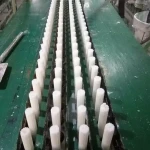





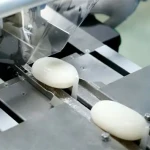



In light of continuous industrial development, candle manufacturing is a prominent investment opportunity with the potential for significant success. The project involves producing various types of wax, including candle wax and synthetic wax for different applications, such as cosmetic wax or wax used in the food industry. A candle manufacturing project is the process of producing different types
Candle Making Shop Project
The project includes establishing a specialized candle factory and providing the necessary equipment to produce a variety of products, such as scented candles, cosmetic wax, and car wax. The wide range of applications allows for diverse target markets.

The success of this project depends on the high quality of the products and the adoption of advanced manufacturing methods to meet the needs of both the local and global markets. A candle manufacturing project is considered a promising venture that combines profitability and innovation, meeting diverse needs across numerous industries.
Table of contents [Show]
- Increasing Demand For Wax Products
- Candle Industry
- Benefits Can Be Gained From Undertaking A Candle Making Project?
- Is Candle Making a Profitable Project?
- Viability Assessment Of A Candle Production Initiative
- Financial Study For Candle Making Shop Project
- How To Start A Candle Making Business
- What Is Cost Of Candle Making Project?
- Key conditions for a candle making venture in must be met?
Increasing Demand For Wax Products
With the increasing demand for wax products, this project offers tremendous opportunities for investors looking to enter a growing market. The candle manufacturing project offers a diverse range of services that cater to customer needs across various sectors. Among the most prominent of these services are: Production of candles, including scented candles, decorative candles, and candles for religious purposes. Production of cosmetic wax used in the cosmetics and skincare industries. Car wax for adding shine and protecting surfaces.
Customization services for candles, such as designing candles with unique shapes or distinctive fragrances. Project Objectives The candle manufacturing project aims to achieve a number of objectives that contribute to its success and sustainability. These include: Producing high-quality products that meet the needs of both local and international markets. Enhancing competitiveness through product development and the provision of innovative solutions.
Candle Industry
Providing job opportunities for the local community. Promoting innovation in the candle industry to meet the demands of evolving markets. Expanding into local and international markets and attracting new customers. Project Advantages The candle manufacturing project boasts several advantages that make it an attractive option for investors, such as: Product Diversity: It can produce several types of wax to meet diverse industrial and commercial needs. Ease of Implementation: The project can be started with minimal investment and expanded gradually.
High Demand: With the increasing use of wax in many industries, the market experiences continuous demand. Sustainability: The raw materials used in wax manufacturing are renewable, contributing to the project's sustainability. High Productivity: The project can operate around the clock, increasing production efficiency. Project Requirements A wax manufacturing project requires a range of resources and equipment to succeed. Key requirements include: Raw materials such as beeswax, paraffin wax, soy wax, and other additives like essential oils.
Equipment and machinery such as wax melting machines, wax molding molds, and material mixers. Suitable space for the factory and for storing raw materials and finished products. Permits and Licenses: Obtaining the necessary licenses from government agencies to operate. Employing a trained and qualified team to manage production and logistics operations. Required Documents To establish a wax manufacturing project, the investor needs a set of official documents, including: An economic feasibility study to assess the project's financial and economic viability.
A commercial license from the relevant authorities is required to establish the factory. Health and environmental permits are required if the wax will be used in the food or cosmetic industries. Proof of ownership or a lease agreement for the location where the factory will be established is required. Employee training certificates are required to ensure the workforce is qualified.
Upcoming Candle Factory Venture Set for 2026
The passion in including aesthetic charm to areas for a calm and advanced environment is driving the increase of candle light making as an innovative and financially sensible venture. Candles have actually developed past their traditional objective of supplying light, currently being demanded as a modern-day attractive function in high demand across various setups like homes, restaurants, hotels, and present stores. This undertaking uses a promising financial investment possibility, particularly for entrepreneurs looking for a distinct company with very little first expenditures. Success in this endeavor depends on having a refined taste, creating innovative designs, and applying reliable electronic marketing strategies. By very carefully intending, picking top-quality materials like soy wax or treated paraffin, and establishing an unique aesthetic brand, this investment principle can be become a rewarding project that creates sustainable profits. This chance is specifically attractive provided the constant development on the market for high end ornamental items and presents.

Creating candles can be a profitable and economic potential. The practice has gained significant traction in the past few years due to the versatility and charm of candles, serving both aesthetic and practical purposes. The essence of the project lies in crafting a range of candles, from scented to decorative and for special occasions, using basic materials like paraffin wax or environmentally friendly soy wax that are easily accessible. This process is enhanced by the incorporation of top-tier fragrance oils, quality colorants, and a variety of molds, enabling the production of unique and artistic designs to cater to a broad array of preferences and requirements.
Benefits Can Be Gained From Undertaking A Candle Making Project?
Using easy-to-find and inexpensive materials, along with the flexibility to personalize fragrances, hues, and forms without restrictions.
There is a consistent demand for candles in various sectors such as decoration, events, religion, and therapy, leading to a steady market unaffected by seasonal fluctuations.
The production capacity can be easily adjusted to accommodate starting in a small workshop and then increasing as needed due to growing demand.
A broad range of items like scented, decorative, special occasion, and therapeutic candles can be offered through various marketing avenues to attract different types of customers. There is great potential for easy growth in local markets and international sales, particularly due to the increasing worldwide interest in high-end and environmentally friendly candles.
Discover a lucrative business venture: The Flower Shop Project offers a compelling chance to invest with exceptionally high returns.
Relatively low initial capital, making it easy to launch the project even with limited financial resources.
Is Candle Making a Profitable Project?
Yes, candle making is a promising and profitable investment opportunity. Recent market reports and studies indicate that the global candle market reached US$ 14.77 billion in 2025 and is projected to reach US$ 20.10 billion by 2030, registering a compound annual growth rate (CAGR) of 6.4% from 2025 to 2030. This reflects a steady increase in demand for luxury, scented, and eco-friendly candles.
Viability Assessment Of A Candle Production Initiative
Identifying the most effective sales pathways involves choosing between online storefronts, partnering with intermediaries such as wholesalers and retailers, and showcasing products at industry-specific trade shows. Meanwhile, crafting a cohesive brand image entails developing a distinctive visual aesthetic, including a name, emblem, color palette, and typography, that embodies the brand's refined yet subtle personality, as well as designing packaging that is both visually appealing and functional, thereby emphasizing the unique benefits of the offerings.
Choosing the appropriate wax variety (such as soy wax, paraffin, beeswax) depending on the needs of the market, quality expectations, and environmental sustainability factors.
Designing effective promotional programs: launch offers, discounts on large orders (B2B), gift packages, and a loyalty program (recurring discounts, reward points), while monitoring their impact on sales.
Discover the significance of conducting a thorough financial viability assessment before embarking on your investment venture.

Financial Study For Candle Making Shop Project
Creating backup strategies and mitigating possible threats.
In-Depth Analysis
Marketing Study
Relying on digital marketing as a cornerstone, launching targeted campaigns, and leveraging influencers in the areas of interior design, lifestyle, and gifts.
Determining regular expenses like workforce, energy consumption, and resource procurement is essential. Forecasting income is also crucial, taking into account the quantity produced and market rates. Additionally, assessing the time required to recoup investments and reach a point of zero loss is vital. Assigning funds for advertising and publicity initiatives is another key aspect. Ongoing evaluation of expenditure and anticipated profitability is necessary, along with devising a comprehensive financial strategy for potential future growth and development.
Conducting a field study and analysis of the candle market in the target regions to determine demand, consumer trends, and target customer segments.
Adopting a proactive approach to building long-term relationships by gathering customer feedback through surveys and providing immediate after-sales support, which fosters loyalty and increases brand recommendation.
Discover the significance and process of conducting a feasibility study, including its key elements, preparation, and implementation.
Examining nearby and neighboring rivals, investigating their offerings, prices, advantages, and drawbacks, as well as their promotional tactics to pinpoint a distinct competitive edge.
Securing high-quality, certified raw materials: pure wax, treated cotton or wooden wicks, thermally stable natural or synthetic fragrances, and safe dyes.
Designing a flexible production line to suit the operational phase (pilot/expansion), incorporating quality control points at the casting, cooling, cutting, and packaging stages.
Complying fully with occupational health and safety standards: adequate ventilation, appropriate fire extinguishing, personal protective equipment (gloves, goggles, heat-resistant aprons), and insulation of hot work areas. Training the team on precision manufacturing techniques, temperature control, handling common defects (such as shrinkage or deformation), and visual and functional quality control procedures.
Calculating the initial expenses of launching a business, encompassing necessary materials, tools, and inventory.
Adopting environmentally friendly practices by recycling wax remnants, using recyclable or biodegradable packaging, and safely disposing of chemical waste.
Developing a diverse product portfolio including scented candles, decorative candles, and functional candles (long-burning, splash-proof, or those designed for restaurant/hotel use).
Establishing a suitable production unit (workshop or small factory) and equipping it with complete equipment, including electric or gas melters, molds of various sizes and shapes, forming and cooling tools, and a professional packaging system.
Appointing a specialized team to manage production, marketing, and finances.
Developing a clear operational plan and work procedures and monitoring their implementation.
Organizing production and labor schedules.
Adopting a precise accounting system to track financial performance.
Providing employee training programs to equip them with the necessary skills.
Maintaining continuous communication with suppliers and customers to ensure quality and service.
Handling licenses and legal regulations systematically.
How To Start A Candle Making Business
For aspiring entrepreneurs looking to ignite their passion for candle creation, launching a successful candle making venture can seem daunting. To help navigate the process, a series of key steps can guide newcomers in establishing a thriving business from the ground up.
Initiate manufacturing operations with a strong commitment to upholding exceptional quality benchmarks, and prioritize the development of packaging solutions that are not only visually appealing, but also ensure consumer safety and minimize environmental impact.
Conduct a thorough market study to identify the most in-demand types of candles, understand the needs of your target customers, and analyze your competitors and their strengths.
Effectively promote your products using social media channels, establish an e-commerce platform, and engage in seasonal trade shows and markets. Stay attentive to customer reviews and consistently enhance your products to stay current with changing trends and market demands.
Create sample candles and test out various forms, hues, and fragrances to develop unique designs that represent your brand's image.
Gather the necessary tools and materials, such as molds, cotton wicks, essential oils, safe dyes, and more.
Create a well-defined business strategy that outlines both immediate and future objectives, establishes a thorough financial plan, selects effective promotional tactics, and pinpoints distribution channels.

What Is Cost Of Candle Making Project?
The cost of a candle-making project varies depending on the following factors:
Cost of manufacturing tools and equipment such as melting pots, casting molds, and candle-making machines.
Expenses for setting up the production space, including tables, ventilation, and safety equipment such as fire extinguishers.
Employee salaries or expenses to run the business.
Packaging costs to ensure product quality and appeal.
Allocate funds for advertising and promotional initiatives to effectively target and engage with your audience.
Expenses for materials like wax, wicks, and colors.
Expenses for licenses and required procedures necessary to initiate the project.
Costs for fundamental services like electricity, water, and gas that are essential for the production operations.
Key conditions for a candle making venture in must be met?
The factory location should be reserved solely for industrial or commercial purposes, and residential use is strictly prohibited on the premises.
A limited area may be designated for waste collection (such as wax remnants and empty containers) within the side setback, 10-- 20 meters from the main facade, and must be covered and secured to prevent the spread of odors or insects.
Administrative offices should occupy no more than 30% of the overall space in the industrial building.
To comply with workplace safety standards, employers are required to furnish an adequate number of restrooms for employees, complete with access to handwashing stations, proper air circulation, and easily accessible cleaning materials.
Specific areas on the site need to be set aside for loading and unloading raw materials and finished goods. These areas should be enclosed, like covered loading docks or bays, to prevent them from spilling over into neighboring properties or blocking public roads.
A separate main entrance and exit gate must be provided for personnel (employees and visitors), located away from loading and unloading gates.
To prevent the spread of fire and pest infestations, construction must incorporate non-combustible materials for all structural elements, including walls, ceilings, and flooring, and ensure that all surface finishes are sealed to eliminate any cavities that could provide shelter for insects or rodents.
Surveillance devices and security monitoring systems need to be placed in secure, tamper-resistant areas that are off-limits to unauthorized persons.
All loading and unloading activities must be confined to the licensed site area, without violating mandatory setbacks or encroaching on public sidewalks.
Suspended ceilings and metal frameworks are allowed as long as they adhere to fire safety regulations. To guarantee their stability and longevity, metal constructions and roofing must be treated with protective coatings that can withstand corrosion and harsh weather conditions, such as epoxy or zinc-based finishes.
Firebreaks must be installed between different processing units (such as smelting, filling, and storage areas), in accordance with Civil Defense requirements, to contain any potential fire and prevent its spread.
A basement level is permitted, provided it is dedicated entirely to parking or electromechanical facilities and complies with all ventilation, lighting, and safety requirements. The building is limited to a ground floor only, or a ground floor plus a mezzanine, while adhering to the permitted building heights in the industrial zone.
Distinct workspaces need to be supplied: enclosed or partially open areas for project management, as well as specific zones set aside for security and guard staff.
Full compliance with the Saudi Building Code and all regulations issued by the Ministry of Industry and Mineral Resources.
A perimeter fence located outside must be built to a minimum height of 2.5 meters using authorized materials such as concrete, cement blocks, reinforced metal mesh, or a mix of these. Additionally, there is the possibility of adding an electronic security gate.