









With rapid technological advancements, 3D printing has become a revolutionary technology that has transformed various industries, including furniture manufacturing.
3D Printing Furniture Factory
3D printing furniture factory project aims to provide innovative and sustainable solutions for producing furniture with modern designs and high quality. This will contribute to reducing costs and production time, while also promoting environmental sustainability by minimizing industrial waste.
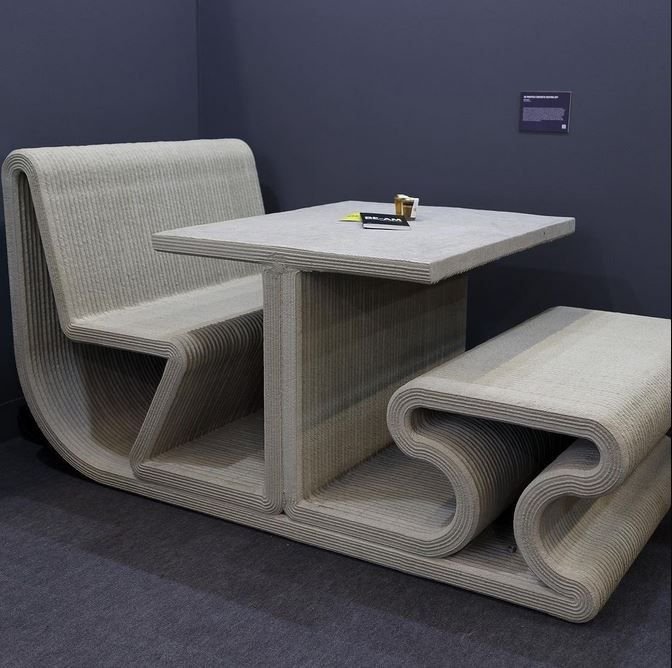
The factory will be a fully integrated production center utilizing 3D printing technology to design and manufacture various furniture pieces with high efficiency. The process relies on advanced software and modern technologies that transform digital designs into tangible products using diverse materials such as reinforced plastics, metals, and recycled wood. The factory will also allow for product customization to meet customer needs, providing a unique experience in the world of furniture.
A 3D printing furniture factory offers a wide range of services, including:
Custom furniture design and production
Furniture remanufacturing
3D printing for interior and exterior decoration
Prototype production
Design and development consulting
Table of contents [Show]
- Project Objectives For A 3D Printing Furniture
- Project Advantages For A 3D Printing Furniture
- Project Requirements For A 3D Printing Furniture
- Required Documents For A 3D Printing Furniture
- Benefits Of 3D Printed Furniture
- Why Filament-Based 3D Printing Is Perfect For Furniture?
- Key Challenges And How Do Well 3D Overcomes Them
- Real-Life Examples of 3D Printed Furniture
Project Objectives For A 3D Printing Furniture
The project aims to achieve a number of strategic objectives, including:
Promoting innovation in the furniture industry by providing modern and flexible designs.
Reducing production costs by minimizing raw material waste.
Providing sustainable solutions through the use of environmentally friendly materials.
Offering a personalized customer experience through custom furniture design.
Expanding into local and global markets by offering high-quality products.
Project Advantages For A 3D Printing Furniture
The project boasts several advantages that make it a successful investment choice, including:
Utilizing modern technology that enhances production efficiency.
Design flexibility and the ability to tailor products to customer needs.
Reducing industrial waste, thus contributing to environmental protection.
Lowering operating costs compared to traditional manufacturing methods.
Fast production and delivery thanks to automation and advanced technologies.
The ability to combine different materials to create unique furniture pieces.
Project Requirements For A 3D Printing Furniture
To ensure the success of a 3D printing furniture factory, several requirements must be met:
A suitable location, preferably in an industrial area with the necessary logistical services.
Equipment and equipment, including 3D printers, specialized software, and finishing equipment.
Raw materials such as reinforced plastics, treated wood, and lightweight metals.
A team of engineers specializing in design and manufacturing, and skilled technicians to operate the equipment.
An advanced management system that contributes to improving the efficiency of operational and administrative processes.
A strong marketing plan based on digital marketing and customer communication strategies.
Required Documents For A 3D Printing Furniture
To obtain the necessary licenses to establish the factory, certain documents are required, such as:
Commercial registration.
Environmental and industrial licenses.
Certifications for the quality of materials used.
A detailed feasibility study for the project.
Contracts for the supply of raw materials and equipment.
Occupational safety and security plans.
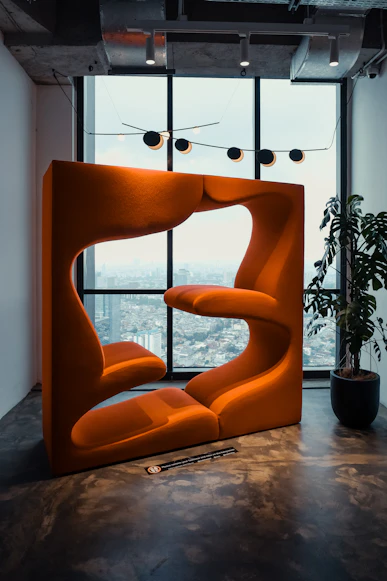
Innovative Use of 3D Printing
In the ever-evolving field of furnishings style and production, 3D printing has become a disruptive
The furniture sector is undergoing a considerable change, driven by innovations in technology, with an expanding emphasis on customized, environmentally friendly, and affordable options.
In contrast to traditional strategies made use of in furniture manufacturing, like those entailing the removal of materials through subtractive techniques.
3D printed furnishings is developed by adding layers upon layers complying with a digital 3D design, utilizing techniques such as cutting, carving, or molding.
By making use of materials like filaments, powders, or materials, this approach provides enhanced versatility in layout and a higher degree of flexibility.
levels of customization, together with the ability to design fancy types and fragile features that would be difficult or impossible.
Benefits Of 3D Printed Furniture
This footage demonstrates the development of a lively chair with the utilization of our DOWELL3D industrial-sized 3D printing modern technology, efficient in creating large-format objects.
For further details or to share your interest, please get in touch with us.
difficult to attain with conventional techniques.
the demand for extensive factory and storage space of inventory.
Why Filament-Based 3D Printing Is Perfect For Furniture?
1. Customization and Personalization
The marketplace for personalized furnishings has never been more robust, with standard manufacturing strategies struggling to keep rate with consumer assumptions.
of giving the level of modification that modern-day customers anticipate. With filament-based 3D printing, developers
With the capability to produce customized layouts, business can effortlessly craft unique products including distinctive kinds, measurements, and elaborate patterns that
flawlessly fits their room, style, and capability requirements.
would certainly be impossible to attain with standard techniques. This allows consumers to pick furniture that
2. Affordable Production
Typical furnishings production can be pricey, particularly when it concerns prototyping and small batch runs.
3D printing using filaments eliminates the requirement for expensive molds, tooling, and manual work, making it a cost-effective option.
option for producing both one-off pieces and small runs. Additionally, 3D printing minimizes material waste, which
further reduces costs and contributes to a more sustainable manufacturing process.
3. Speed and Efficiency
In the manufacturing sector, efficiency is key, and 3D printing offers a significant advantage by substantially cutting down on production timelines, thereby saving valuable resources, rather than
The cutthroat market for home furnishings.
Unlike traditional furniture production, which can take several weeks or even months to manufacture and assemble, companies can now rapidly produce items using printing technology.
Both preliminary models and completed items can be produced, enabling more rapid innovation and reducing the time needed for bringing new products to market, a key factor in today's fast-paced industry.
4. Sustainability
Sustainability is a top priority for many companies and consumers today. By using filament-based 3D printing,
businesses can reduce their environmental footprint by minimizing material waste, energy consumption, and transportation costs. Additionally, 3D printers are capable of using recycled filaments, further supporting eco-friendly production practices.
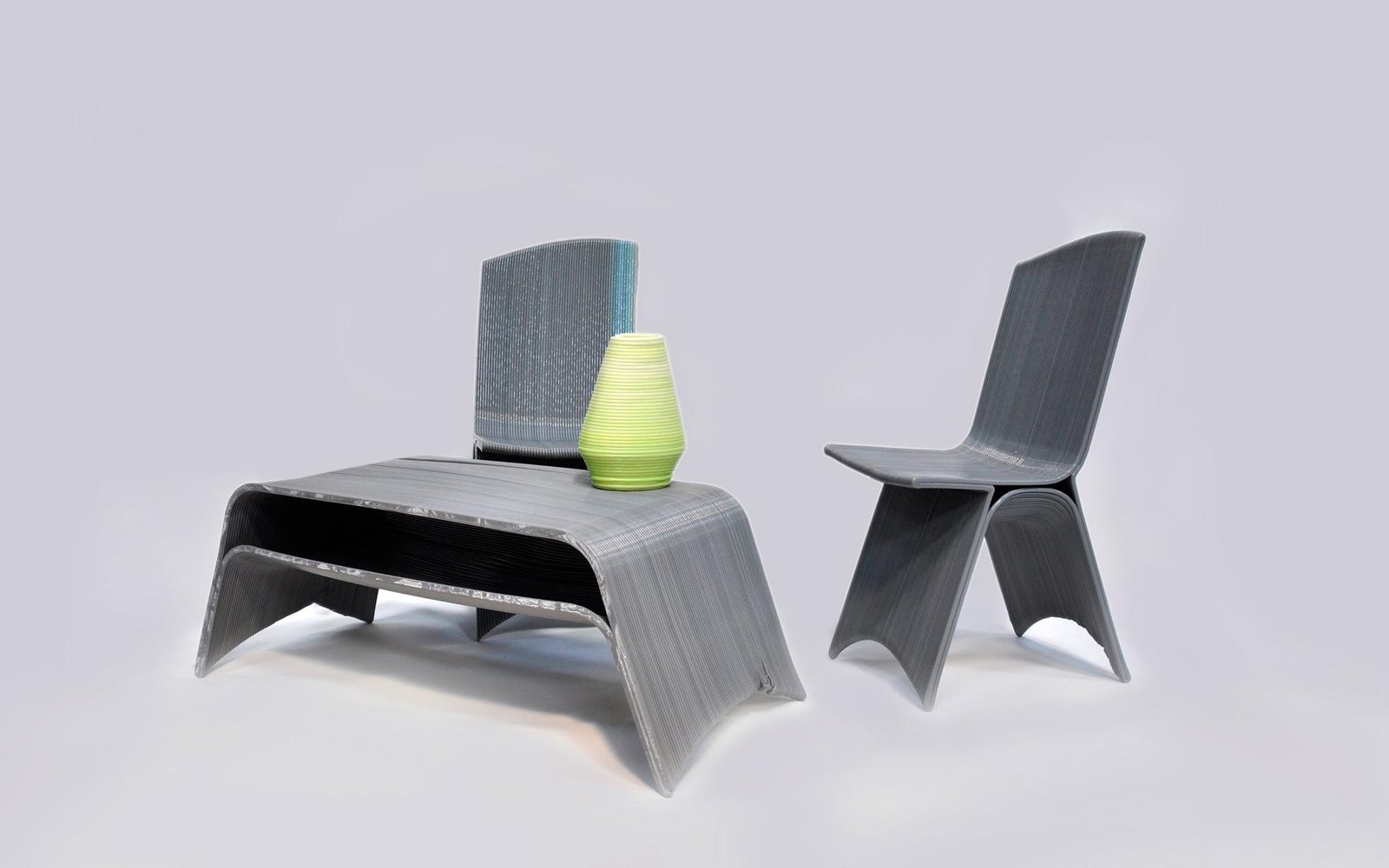
Key Challenges And How Do Well 3D Overcomes Them
While 3D printing in the furniture industry offers numerous benefits, there are also some challenges that The long-lasting quality of 3D-printed furnishings.
Companies that produce goods may encounter several challenges, such as restrictions related to the materials they use, the need for additional processing after production, and guaranteeing the quality and safety of their products.
1. Choosing the Right Materials
minimize the need for extensive post-processing. Additionally, our 3D printers are equipped with features that
This includes PLA, ABS, PETG, and other materials, allowing manufacturers to choose the most suitable material for their individual needs.
Two crucial considerations are longevity and visual attractiveness. Thankfully, DOWELL3D provides an extensive selection of premium filaments,
Durable pieces that stand the test of time.
Although it may take some time, DOWELL3D's sophisticated printers create flawless and top-notch prints.
Our filaments are recognized for their exceptional durability, versatility, and quality, which make them ideal for crafting.
Maintain uniformity and accuracy to minimize the likelihood of errors.
Filament-based 3D printing uses a variety of materials, each with its own properties. For furniture manufacturing,
After a furniture item is 3D printed, it usually needs additional steps like smoothing surfaces, adding color, or putting together parts.
2. Resilience and Robustness
One common concern with 3D-printed furniture is its durability compared to traditionally manufactured pieces.
However, with the right materials and printing techniques, 3D-printed furniture can be just as strong and long-your 3D-printed furniture is both functional and stylish.
Remaining a reliable choice, DOWELL3D's filament is specially designed to provide exceptional resilience and long-lasting performance.
Real-Life Examples of 3D Printed Furniture
To give you a better idea of how 3D printing can be applied to furniture manufacturing, here are a few examples of 3D Printed Furniture:
printing is undoubtedly the future of furniture production. At DOWELL3D, we're proud to be at the forefront of this
Additionally, the study emphasizes the importance of promoting awareness about innovative industrial methods that mitigate the disadvantages associated with conventional production techniques. To achieve this, it is essential to foster understanding of cutting-edge technologies and their accessibility within local markets, thereby addressing the constraints inherent in traditional manufacturing approaches.
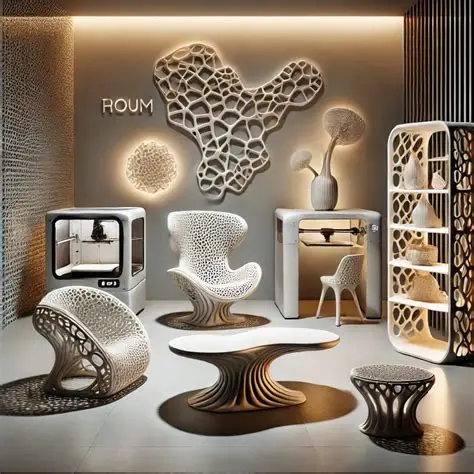
Our extensive background, top-notch goods, and committed client assistance.
Advances in three-dimensional and four-dimensional printing have transformed production methods in numerous sectors, presenting a substantial opportunity for the furniture industry to rethink its traditional design strategies and manufacturing techniques.
The study seeks to explore a fresh approach in furniture production methods by moving away from the conventional multi-step processes, thus creating opportunities for new discoveries and creative advancements.
The research assumes that increasing awareness among the professionals such as designers and manufacturers about the capabilities of digital printing will contribute to mastering complex processes that can not be achieved through traditional manufacturing methods.
This stunning vase exemplifies the vast creative potential of 3D printing, a technology that has revolutionized the world of design, particularly in the realm of large-scale furniture creation, where it enables the production of bespoke pieces with unparalleled precision and complexity.
The main issue to be investigated is assessing the effectiveness and limitations of cutting-edge manufacturing technologies, as well as the obstacles they encounter in relation to conventional production techniques.
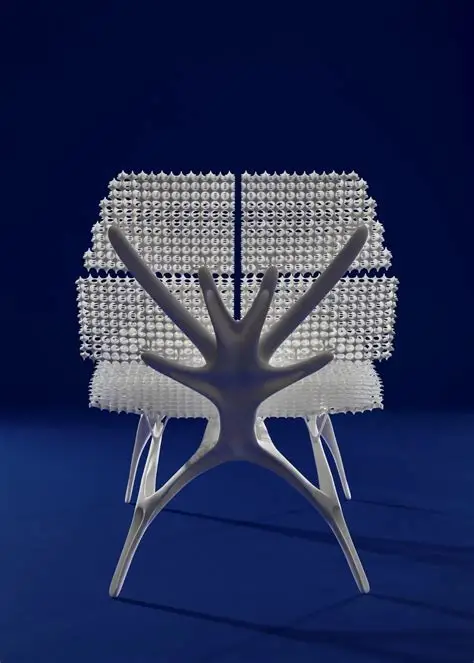
The research importance lies in the need to keep up with the advancements in the field of smart furniture manufacturing and studying the interaction between its technological processes and contemporary market requirements.
Final Thoughts
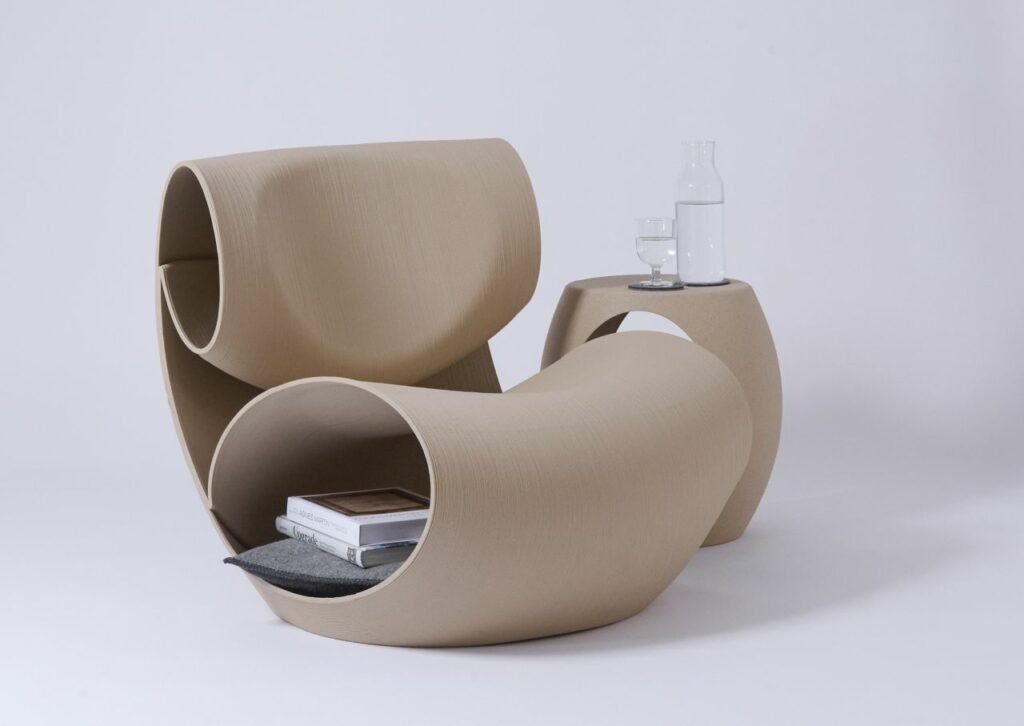
The chair, which takes inspiration from flowers, demonstrates the combination of artistic creativity and practicality through the use of 3D printing technology. Meanwhile, the coffee table, also created using 3D printing, presents a distinct design that highlights the endless artistic potential offered by this innovative technique.
transformation, offering high-quality filaments and reliable 3D printers to help you bring your ideas to life.
Are you prepared to begin your exploration of 3D printing? Opt for DO WELL 3D to fulfill all your 3D printing requirements and make the most of this opportunity.
The research results are as follows: the transition of digital furniture production, using 3D and 4D printing technologies, from the stage of experimental prototypes to the actual quantitative production has a profound impact on the field of future furniture manufacturing and design.
The incorporation of 3D printing technology that utilizes filaments is revolutionizing the furniture sector, presenting designers with a range of innovative and promising opportunities.
Both producers and end-users are benefiting. The capacity to design personalized, budget-friendly, and eco-friendly furniture has made 3D printing a game-changer, offering a unique solution that caters to the needs of various stakeholders, including businesses and individuals.